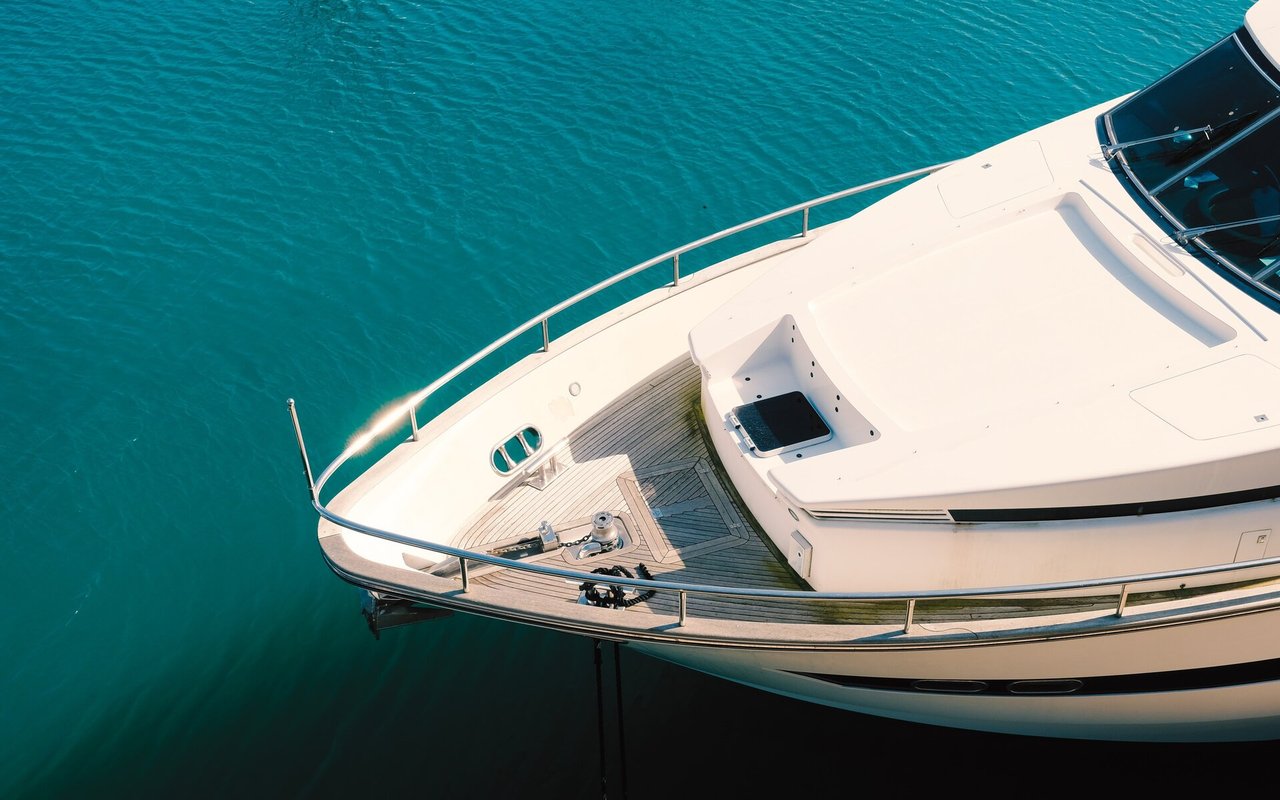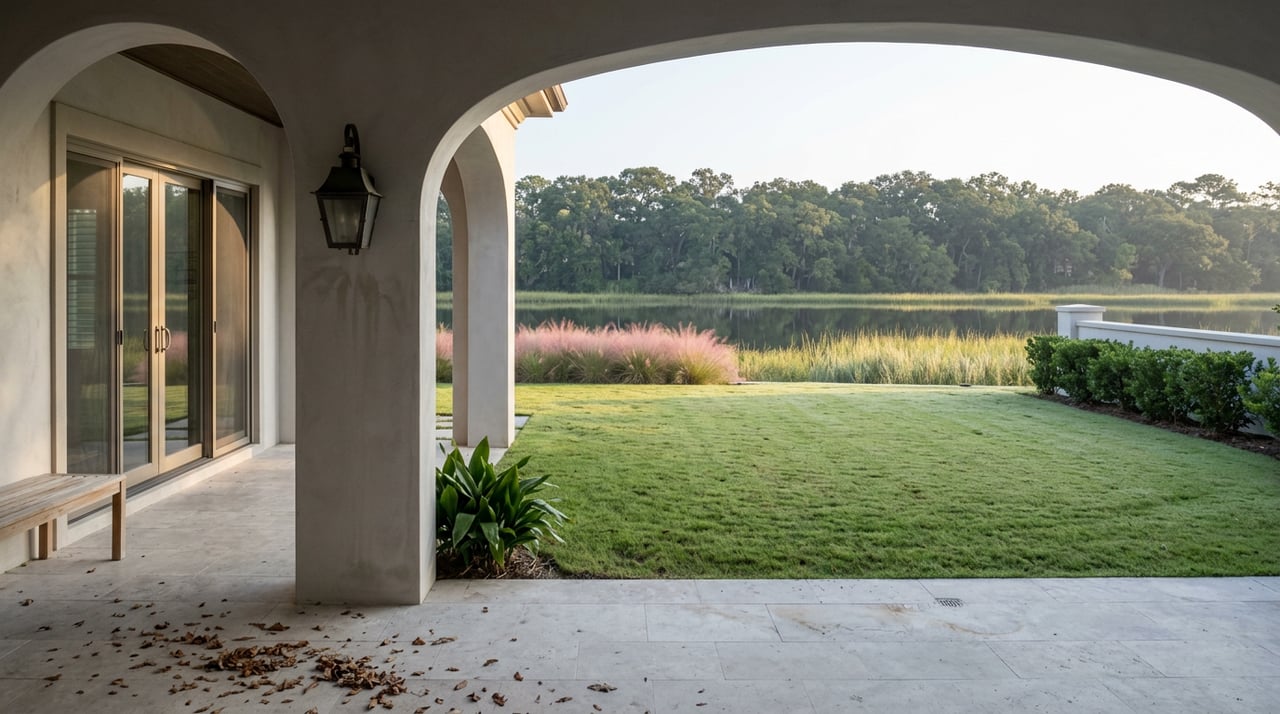
Walk the dock behind the Tiki Hut most mornings this week and you will see it before you hear anyone talk about it. The water off Lanceford Creek goes nervous. Small fish scatter on the surface in tight, panicked showers. Something underneath is working them, and it has been building since the first week of September.
That something is the mullet run, and most of what gets written about it treats Fernandina Beach as a place you drive to for it. Guides point anglers toward the St. Marys jetties, the surf at Fort Clinch, Nassau Sound. All good water. None of it explains what residents of Oyster Bay Harbour already half-know: the same run is happening in the creek behind their own boat slips, and for about three more weeks it may be the better bet than anywhere you'd need a truck and a boat ramp to reach.
The run that started at the jetties is already here
The mullet run is an annual event along Florida's coast, when millions of finger mullet move down the beaches and through the inlets, and everything that eats them follows. It builds through September and peaks somewhere between mid-September and October, which puts the community squarely inside the best of it right now.
At the jetties, that means schools of tarpon, jack crevalle, and bull redfish crashing bait in open water, the kind of chaos that draws boats out from Fernandina Harbor Marina every morning. But the same migrating bait pushes back into the tidal creeks that feed the Intracoastal, and Lanceford Creek and Soap Creek, where Oyster Bay Harbour's own marina sits at the confluence, are exactly that kind of feeder system. Florida's state park service notes that tarpon follow the fall mullet run into inshore waters like Nassau Sound before continuing south, and redfish and speckled trout numbers both climb in the marsh through the same stretch of fall. The fish do not know the difference between a public jetty and a private dock. They know where the bait is.
A full moon and a north wind matter more than the calendar
Here is where most fishing content stops being useful, because it talks about "fall" as a three-month window when the real trigger is much narrower than that.
Redfish tail in the flooded marsh grass around Oyster Bay Harbour under a specific combination: a full moon pushing the tide higher than usual, paired with a steady northeast wind that holds the water up longer than a normal flood. When that happens, water moves up into the spartina grass that lines Soap Creek and the fish move with it, tails breaking the surface as they root for crabs and shrimp in water sometimes barely deep enough to cover them. As the tide starts to fall, they disappear just as fast, dropping back into the deeper turns of the creek to wait for the next cycle.
That means the best morning to walk down to the community dock with a rod is not a random Saturday. It's the morning after a full moon with wind out of the northeast, an hour before the tide floods completely. Miss that window and you're back to fishing the same creek the ordinary way, which is still decent, just not the version that makes people talk about it at the Yacht Club bar afterward.
For residents without a boat, this is also the argument for using the community's kayak launch rather than driving anywhere. A kayak gets into skinnier water than most center consoles, which matters when the fish you're after are sitting in six inches of flooded grass fifty yards behind a neighbor's dock.
The chart lies a little at the mouth of Lanceford Creek
If you're new to docking at Oyster Bay Harbour, or if you've only ever come in during daylight on a calm tide, there's a detail worth knowing before you try it under different conditions. The navigation charts for the marina entrance show a shallow bank right at the mouth of Lanceford Creek, coming off ICW marker R10. Read literally, it looks like you should hug wide. In practice, the deep water sits in the center of that stretch, and the smarter approach favors the south, or port, side of the creek as you come in, keeping to the marina side rather than drifting toward the marsh side.
The other thing worth knowing is the current. Cruising guides for the marina flag it specifically: expect a swift current right as you're trying to dock, strong enough to catch a boat off guard if you're not ready for it. It's a small thing, the kind of local knowledge that never makes it onto a brochure, but it's exactly the kind of detail that separates someone who's docked here fifty times from someone reading the chart cold.
What's happening around the dock while the marsh works
None of this shuts down the rest of community life this month. The Yacht Club keeps its usual rhythm through the fall, closed Mondays, open shorter hours midweek and later into the evening Thursday through Saturday, with a quieter Sunday afternoon schedule that tends to catch people right as they're coming off the water. The clubhouse pool and the new pickleball and clay tennis courts stay busy on the same mornings the marsh is producing, which means it's common to see one half of a family headed out with rods while the other half heads to the courts.
For anyone chasing bigger water once the inshore bite slows on a falling tide, Schultz's Fish Market, an artificial reef about five miles offshore, holds red snapper, gag grouper, and cobia through the same season, a reasonable next stop for residents with a boat capable of running out past the inlet. And Amelia Angler Outfitters, working out of Fernandina Beach, has long tracked exactly this kind of tide and moon pattern for local charters, which is part of why the flood tide advice above lines up with what guides on this water have been saying for years.
The next thing to watch for is already offshore
The mullet run isn't the only seasonal shift setting up right now. North Atlantic right whales begin moving into calving waters off the Georgia and Florida coast as fall turns to winter, passing not far beyond the same inlet that Oyster Bay Harbour's marina feeds into. The Fernandina Observer, the area's own local news outlet, recently covered Whale Guard Bioacoustics Research, a nonprofit founded by Nick and Maggie Williams that studies and works to protect these whales along this stretch of coast, and reported a sold-out premiere of a new documentary on the species at Tigre Island. It's a reminder that the water outside the marina keeps working through the winter too, just on a slower, quieter schedule than a September mullet run.
There's also the simpler version of that same idea closer to home. The marina sits close enough to open water that a boat leaving the dock can reach Cumberland Island National Seashore without much of a run at all, a trip that gets easier to justify once the fall bite starts to taper and a slower afternoon on the water sounds better than another hour chasing tailing reds.
None of this requires planning a season around it. It just requires knowing that the creek outside your own dock is doing something right now that most people drive somewhere else to find, and that the difference between an ordinary morning and a good one usually comes down to a full moon, a north wind, and knowing which side of the channel actually holds the water.
If you're new to the community and still learning which mornings are worth setting an alarm for, or if you've lived on Lanceford Creek for years and have your own read on the marsh that differs from what's written here, I'd like to hear it. You can find more on the neighborhood at the Oyster Bay Harbour community page, and if there's ever anything else about life in this corner of Fernandina Beach I can help with, reach out to Lily Bostick. Let's Connect.